
This article explains how to invite members or teams to your base, manage their roles, and remove them when needed.
Invite Members to Base
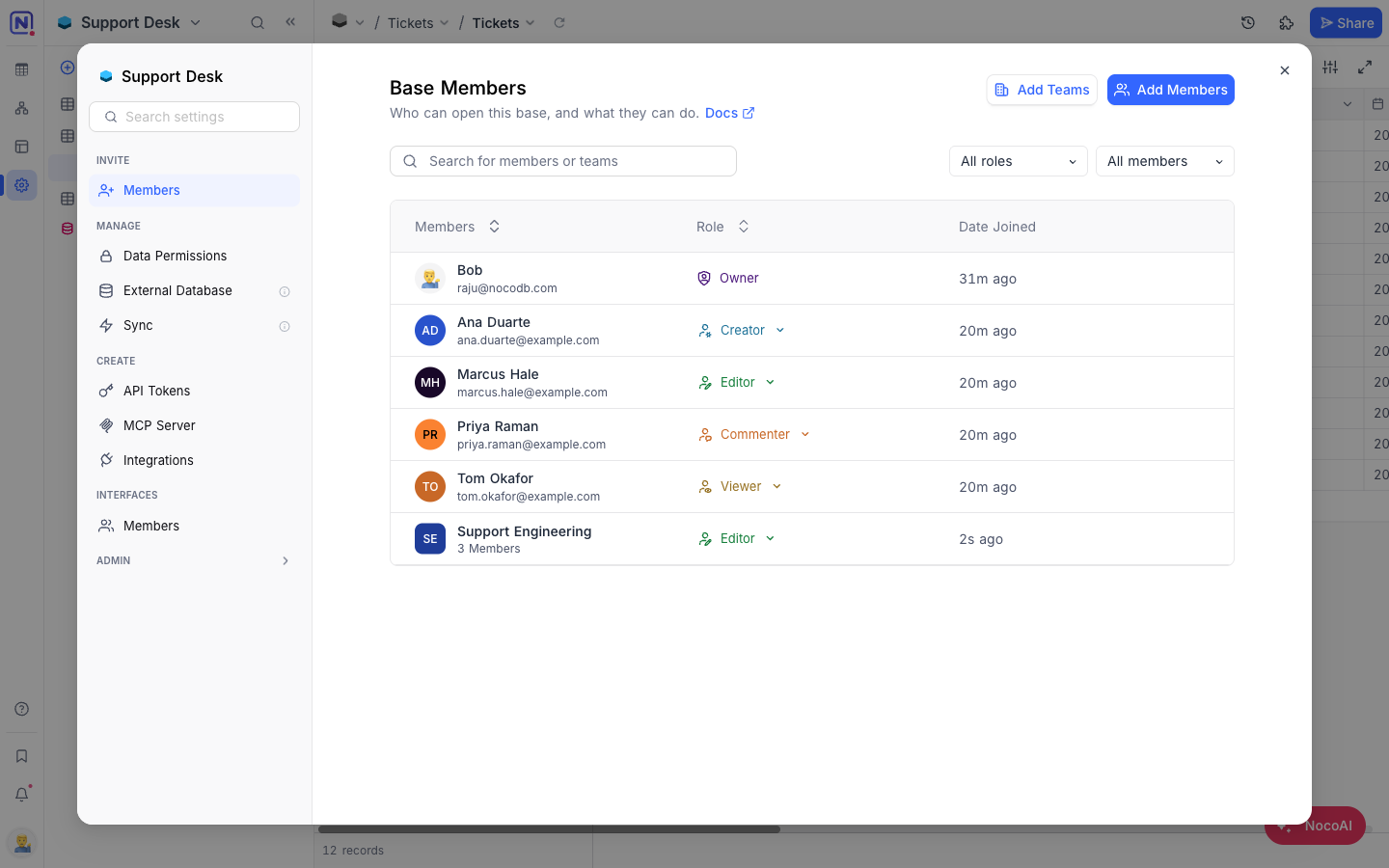
- Open the base and go to Base Settings → Invite → Members .
- Click Add Members .
- Click the field under Invite specific people .
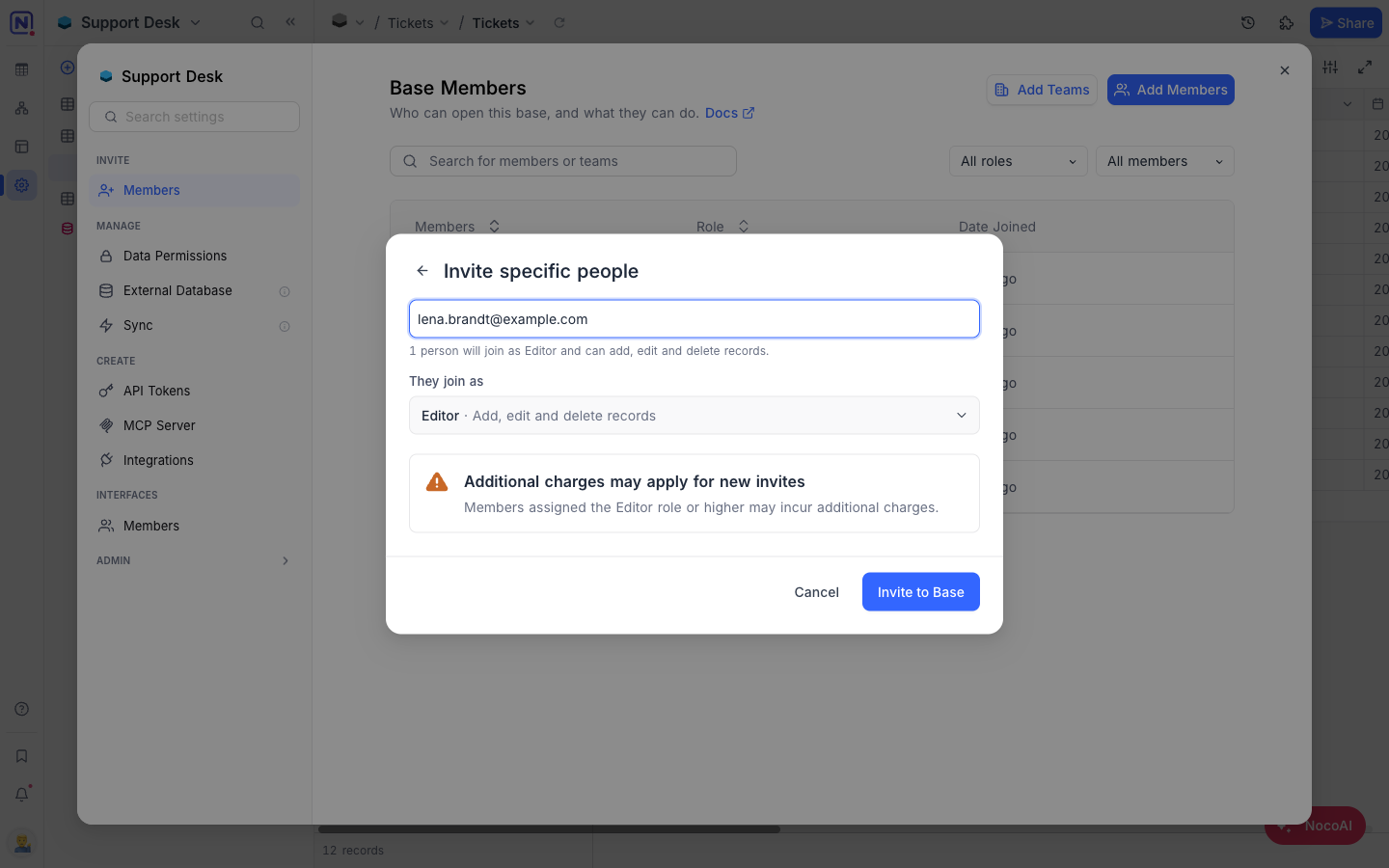
- Enter one or more email addresses, comma or space separated.
- Under They join as , choose the role everyone in this invite receives. New invites default to Editor .
- Click Invite to Base .
หมายเหตุ: You can only assign roles that are at most equal to your own role on the base.
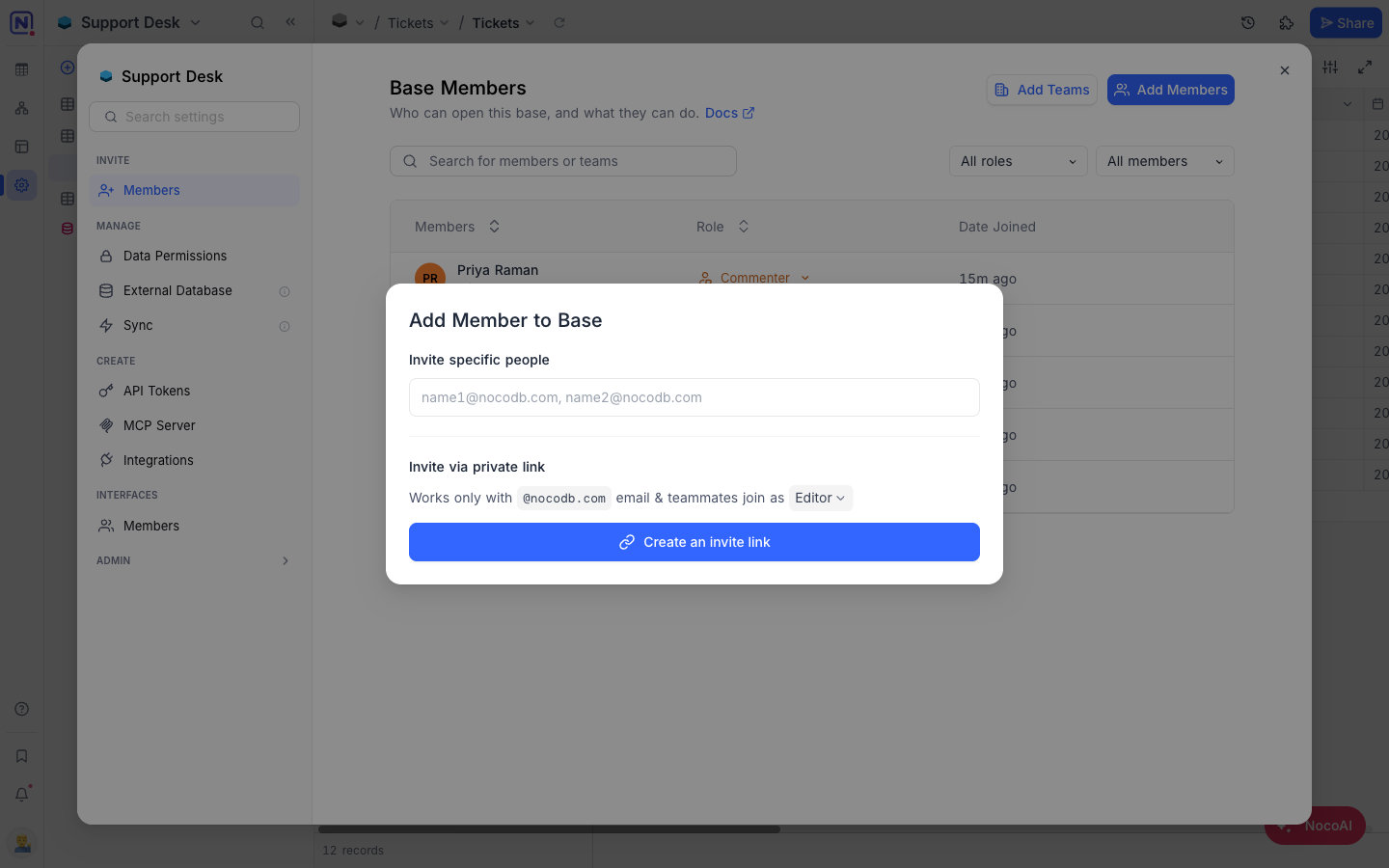
The same dialog offers Invite via private link as an alternative to inviting one address at a time: choose a role, click Create an invite link , and anyone who opens the link can redeem it to join this base. Joining a base through a link grants access to that base only. See invite links for restricting a link to an email domain, managing several links, and deleting one.
Workspace members inherit the role assigned at the workspace level unless a specific role is set at the base level. You can also invite users directly to a base without broader workspace access — ideal for external partners or temporary contributors.
Invite Teams to Base ☁
- Open the base and go to Base Settings → Invite → Members .
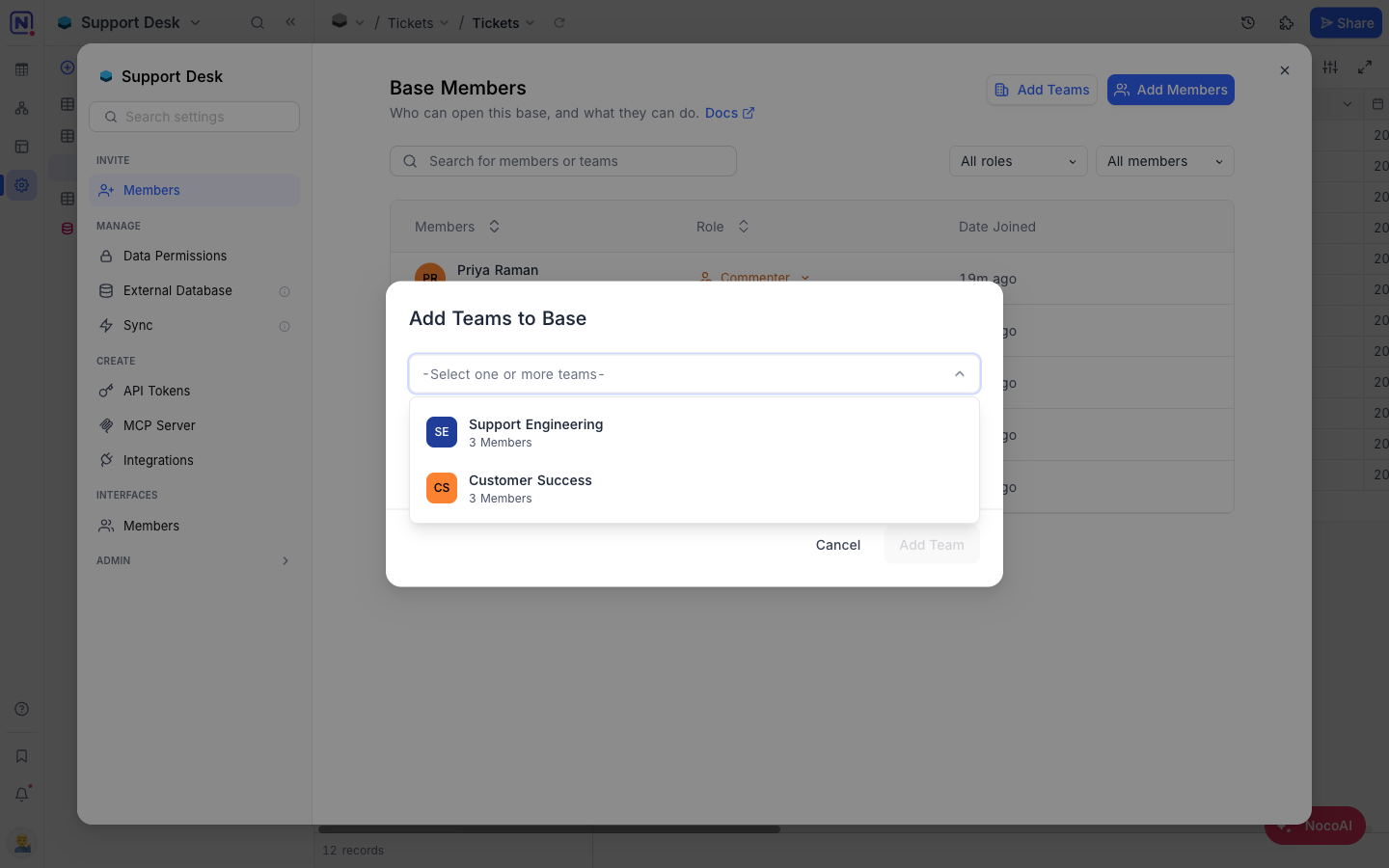
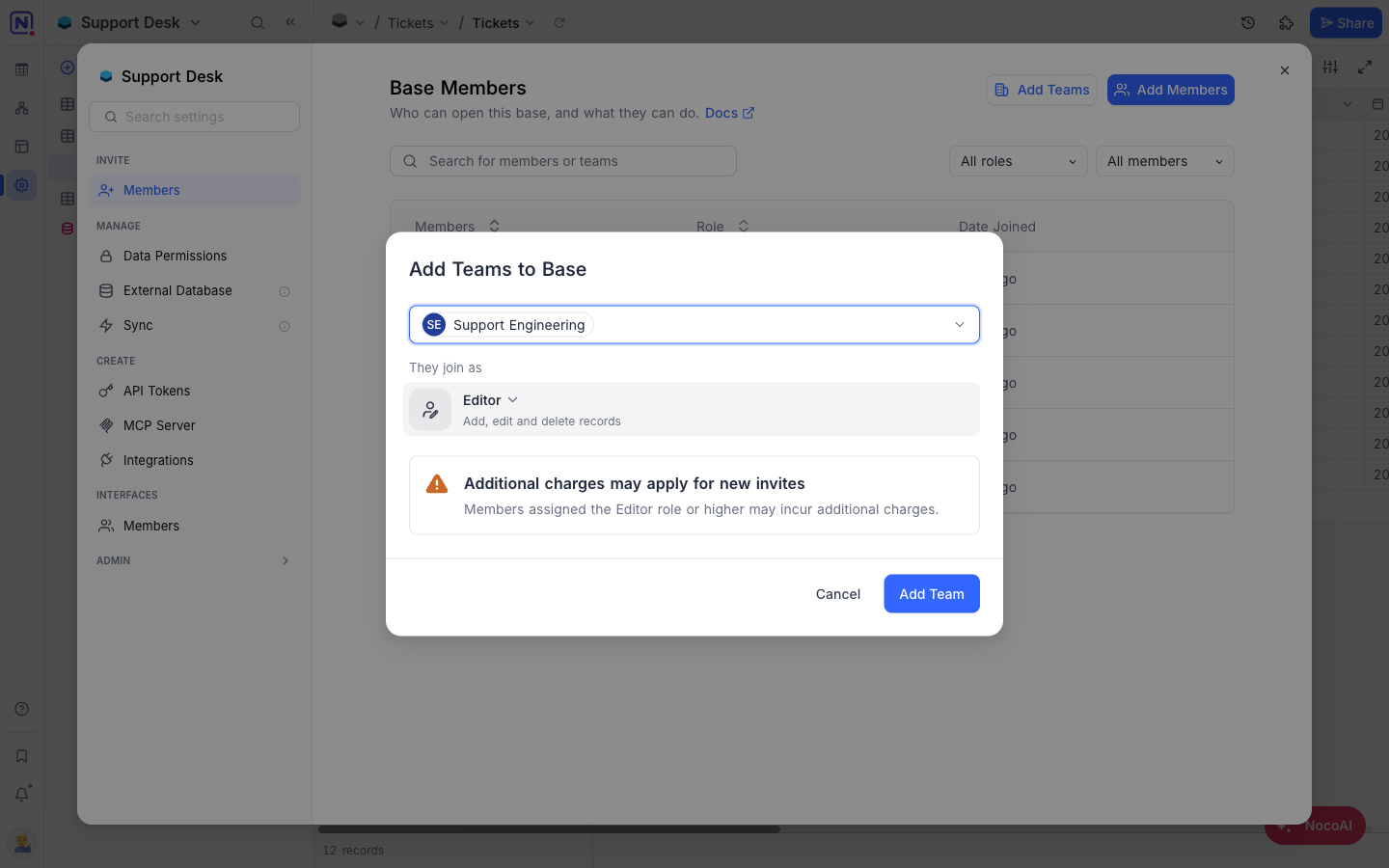
- Click Add Teams .
- Select one or more teams from the dropdown.
- Choose a role — Editor , Commenter , Viewer , or No Access .
- Click Add Teams .
หมายเหตุ: Teams cannot be assigned the Owner role at the base level. When a team is invited, all its members inherit the assigned base-level role unless overridden by an individual role.
To learn more about creating and managing teams, refer to the Teams documentation .
List Base Members and Teams
The Members page displays all users and teams with access to the base, including their role and date joined. Roles inherited from the workspace are labelled Role inherited from workspace .
Modify Roles for Members or Teams
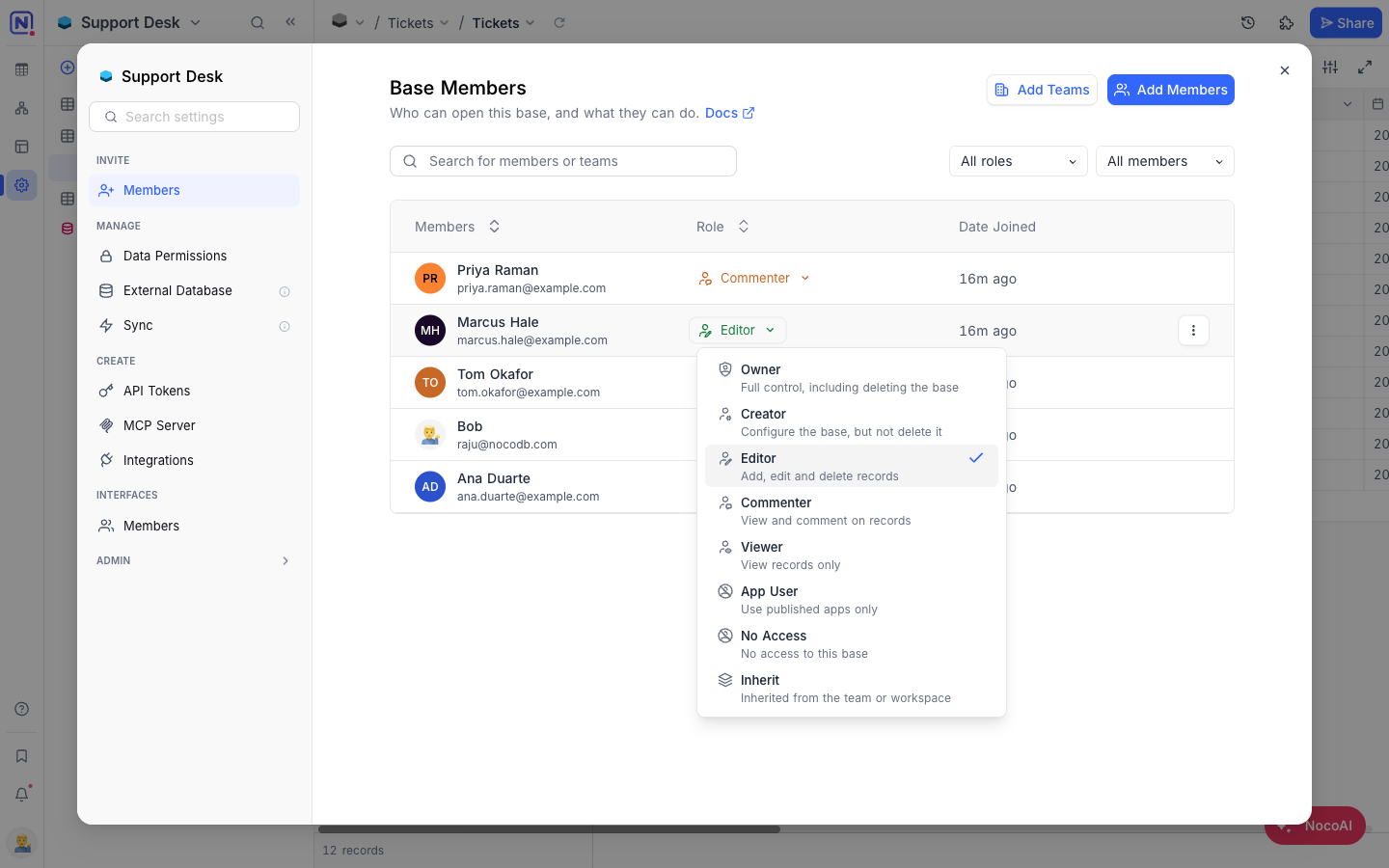
- Click the role dropdown next to the member or team.
- Select a new role — Owner , Creator , Editor , Commenter , Viewer , App User , No Access , or Inherit . Each option carries a one-line description, and the change takes effect immediately.
หมายเหตุ: You can only assign roles that are at most equal to your own role on the base.
Role Precedence
When a user has multiple role assignments through both team and individual access:
- Individual explicit role takes precedence over team-assigned role.
- Base-level roles override workspace-level roles.
- In case of multiple team roles, the highest permission applies.
Learn more about effective role resolution .
Remove or Revoke Base Access
Deny Access
To block a user or team from accessing the base:
- Click the role dropdown next to the member or team.
- Select No Access .
Revoke Explicit Assignment
To remove a base-level role and fall back to workspace or team inheritance:
- Click the role dropdown next to the member or team.
- Select Inherit .
หมายเหตุ: Use No Access to explicitly block access. Use Inherit to remove the base-level assignment and fall back to workspace or team role.
Availability
- Teams are available on NocoDB Cloud (Business plan and above) and licensed self-hosted deployments (Scale plan and above).
Related
Related pages
- Create Base : Learn how to create a base in NocoDB.
- Folders : Organize tables, documents, and dashboards into collapsible folders in the base sidebar.
- Import Airtable to NocoDB : A complete import of your Airtable base to NocoDB within minutes
- Share Base : Procedures to share a base & generating embedded iframe
- Base Snapshots : Procedures to create and manage snapshots
- Base Trash ☁ : View, restore, and permanently delete trashed items — records, tables, views, fields, dashboards, widgets, workflows, scripts, and extensions — from a single base-level Trash.
- Trash Settings ☁ : Configure per-table trash retention and disable trash on a per-table basis.
- Private Base : Learn how to configure and manage access to Private Bases in NocoDB.